In the high-stakes environment of a 2026 operating theater, the margin for error has narrowed to a degree that was unimaginable a decade ago. While surgeons have long relied on the digital clarity of CT and MRI scans, a fundamental gap has always existed: the human brain’s ability to translate two-dimensional “slices” into a three-dimensional understanding of a patient’s unique, and often distorted, internal landscape. This cognitive leap—the mental reconstruction of a flat image into a physical reality—is one of the most taxing aspects of surgical preparation.
As we move deeper into 2026, the medical community is solving this problem through a revolution in “Tactile Diagnostics.” Leading medical institutions are no longer satisfied with looking at a screen; they are demanding the ability to hold a perfect 1:1 scale model of a patient’s anatomy before the first incision is ever made. This shift is being driven by the integration of the professional-grade 3d printer directly into the clinical workflow.
The Evolution of the “Visual Vocabulary” in Surgery
The primary breakthrough in 2026 medical modeling isn’t just the reproduction of shape—it is the sophisticated application of color and material variance. In the early days of medical printing, a replica of a heart or a section of a skull was typically a monochromatic plastic block. While helpful for understanding basic geometry, these models lacked the critical “visual data” necessary for complex decision-making.
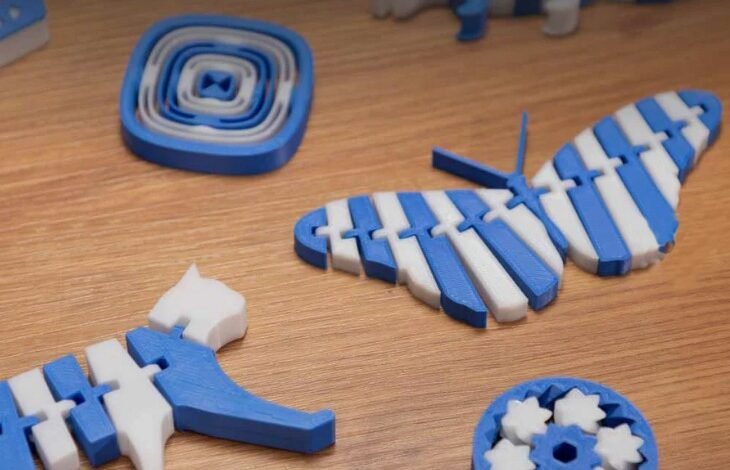
Today, advanced hardware allows for a “visual vocabulary” where different anatomical structures are represented by distinct colors and textures. By utilizing a high-fidelity multi color 3d printer, surgical teams can now produce models where vascular structures are printed in translucent red or blue, tumors are highlighted in high-contrast neon green, and nerve pathways are traced in bright yellow.
This color-coding is far more than an aesthetic choice; it is a life-saving tool. For an oncology surgeon, seeing exactly where a tumor (green) encapsulates a major artery (red) in a physical model allows them to plan an approach that minimizes the risk of catastrophic bleeding. In the 2026 surgical suite, “seeing” is no longer enough; surgeons must be able to “feel” the spatial relationship between healthy tissue and pathology.
See also: Integrating Big-Screen Tech with Smart Home Ecosystems
Reducing “Time Under Anesthesia” Through Physical Rehearsal
In modern surgery, time is the most critical variable. The longer a patient remains under general anesthesia, the higher the physiological stress and the greater the risk of post-operative complications. “Exploratory surgery,” once a common necessity, is increasingly viewed as a failure of pre-operative planning.
By utilizing a multi color 3d printer, surgeons can perform a physical “dry run” of a procedure. They can test different sizes of surgical mesh, determine the exact angle for a bone screw, or practice the delicate peeling of a tumor away from a vital organ. This physical rehearsal means that when the surgeon enters the actual operating room, they aren’t discovering the anatomy for the first time—they are following a path they have already navigated.
Studies conducted in early 2026 have suggested that pre-operative planning with high-fidelity, multi-color models can reduce “in-theater” time by up to 20%. For a complex eight-hour neurosurgical procedure, saving nearly two hours of time under anesthesia is a monumental improvement in patient safety and recovery speed.
A New Era of Training and Patient Consent
The impact of this technology extends beyond the lead surgeon. In teaching hospitals, these models have become the gold standard for resident training. Instead of learning on generic cadavers that may not represent the specific complexities of a rare condition, residents can practice on “identical twins” of the patient’s anatomy. This allows for a level of specialized training that was previously impossible, ensuring the next generation of surgeons is better prepared for the anomalies they will face in the real world.
Furthermore, the 3d printer has become a powerful tool for patient communication and informed consent. Explaining a complex spinal fusion or a heart valve replacement using a computer monitor can be confusing and frightening for a patient. However, when a doctor hands a patient a physical, color-coded model of their own anatomy, the comprehension gap closes instantly. Patients can see the “why” and “how” of their surgery, leading to higher levels of trust and significantly lower pre-surgical anxiety.
The 2026 Technical Standard: Precision and Reliability
The medical field demands a level of mechanical precision that hobbyist machines simply cannot provide. To be useful in a clinical setting, a printer must offer micron-level accuracy and a “set-and-forget” reliability. The 2026 standard for a hospital-integrated 3d printer involves industrial-grade linear modules, vibration compensation, and automated calibration systems.
In 2026, the software pipeline has also matured. We now see AI-driven “slicing” tools that can automatically segment MRI data and assign specific colors to different tissue densities. This reduces the time from “scan to print” from days to hours, making it possible to use 3D printing even in semi-urgent trauma cases where a rapid response is required.
Conclusion: The Tactile Future of Medicine
We are rapidly approaching a paradigm shift where performing a complex surgery without a physical, patient-specific model will be seen as an unnecessary risk. As the technology behind the multi color 3d printer becomes more streamlined and the materials more biomimetic, the “Multi-Material Surgeon” will become the global standard of care.
By merging the digital precision of 2026 imaging with the intuitive power of tactile feedback, we are entering a new frontier of personalized medicine—one where every surgical path is mapped out in high-definition color long before the patient ever reaches the operating table.